Guaranteed airtightness for new homes—without the guesswork
Precision Envelope Sealing uses the AeroBarrier system to seal the tiny leaks traditional methods miss. We measure your home’s airtightness (ACH50) before and after, then seal to your target—helping builders hit code, energy-model requirements, and high-performance goals with confidence.
Our mission
Our mission: make high-performance building achievable in New Brunswick
Services
AeroBarrier air sealing for new construction
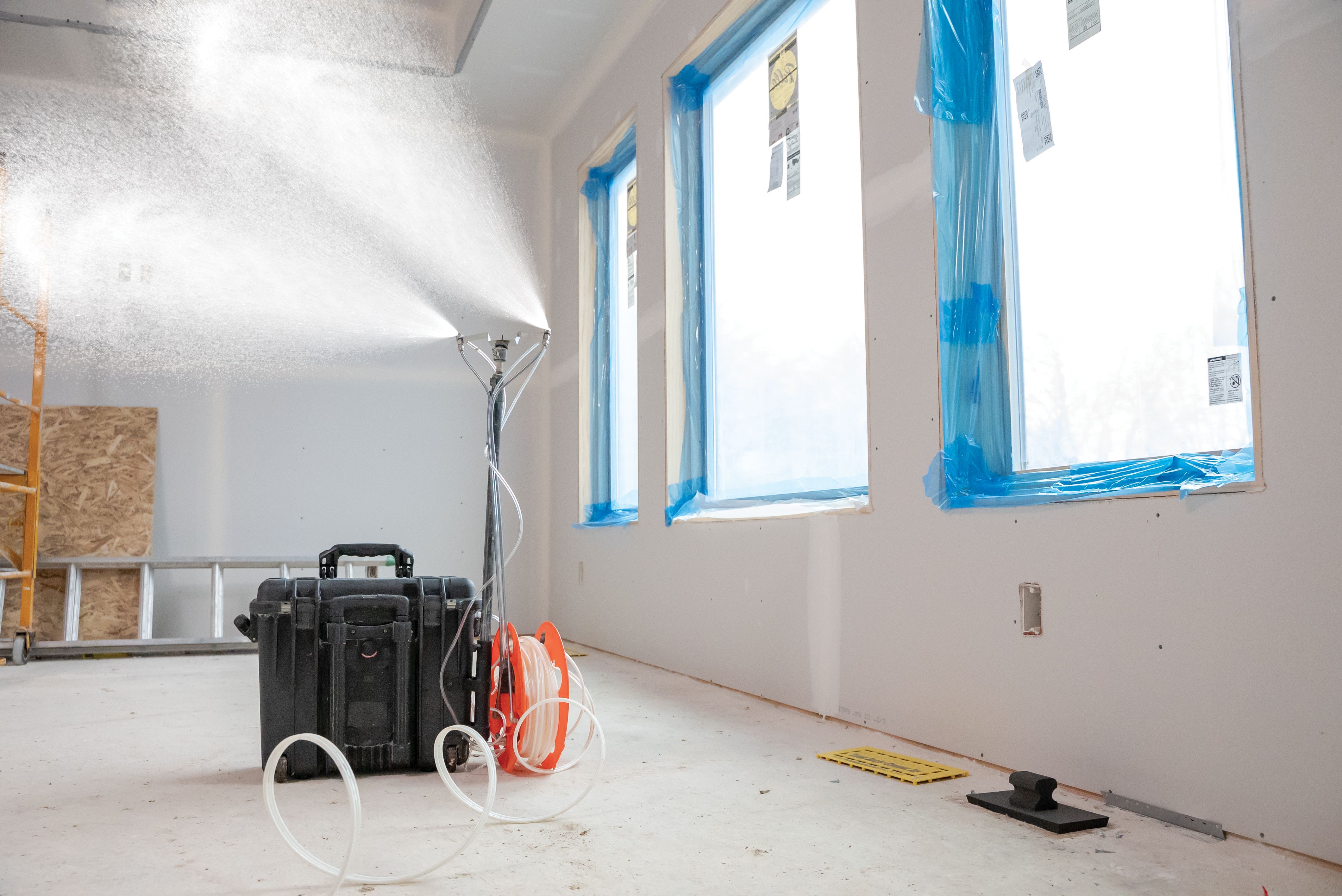
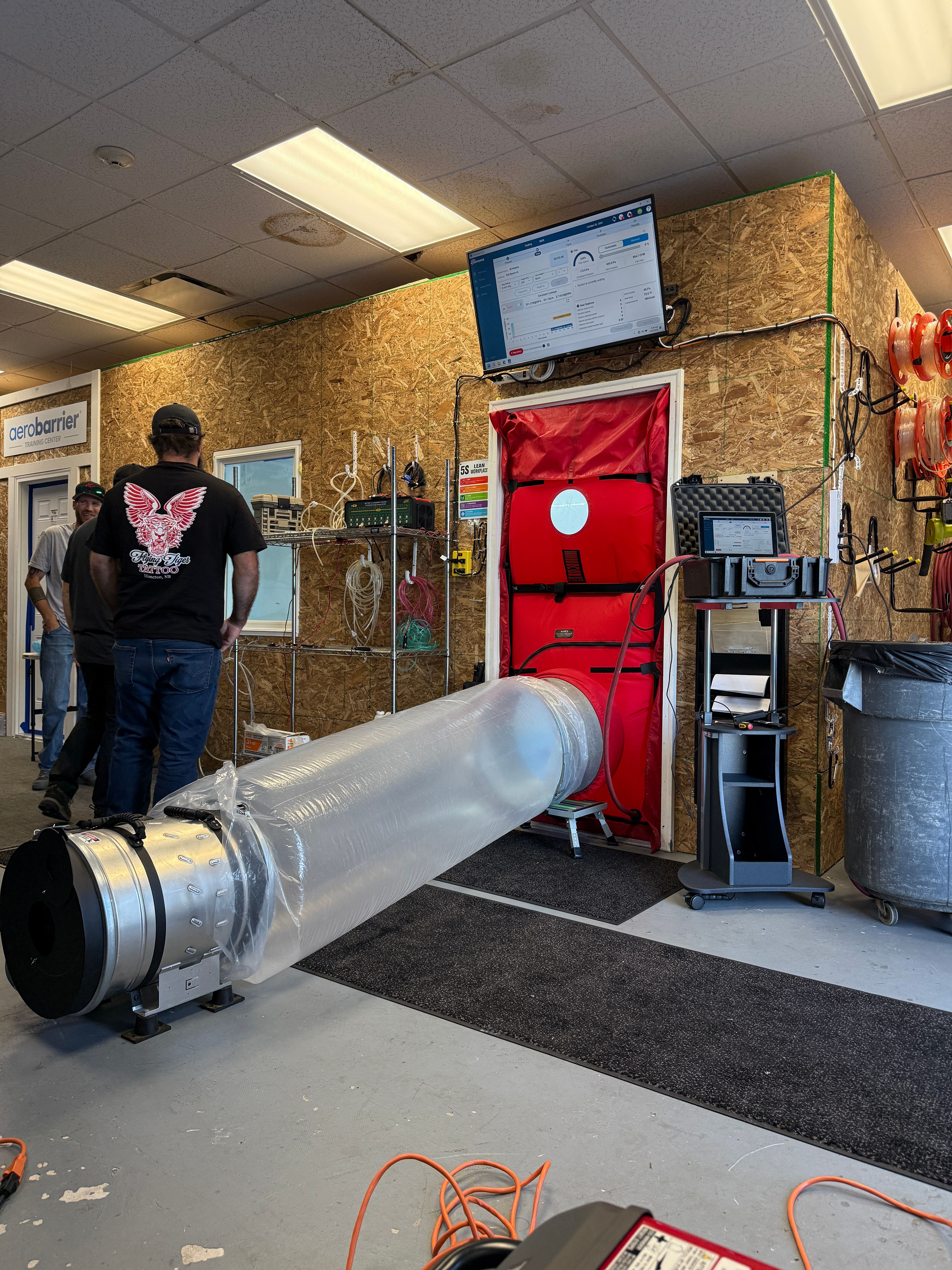
We bring a computer-controlled sealing process to your jobsite. Using a blower door and AeroBarrier mainframe, we measure leakage, set a target (from code-level tightness to Passive House), and seal the building envelope after drywall—typically in a single day. You get verified results you can document and build around.
Blower door testing (pre & post)
We quantify ACH50 before and after so you know exactly where you started, where you finished, and what changed.
Builder coordination & scheduling
We coordinate timing around drywall/mud coat and your wall assembly so the process fits cleanly into your build schedule.
High-performance targets
From Tier-code compliance to ultra-tight builds, we help you reach your airtightness goal—“as tight as reasonably achievable.”
Benefits
Why builders choose Precision Envelope Sealing
Traditional air sealing is time-consuming and uncertain. AeroBarrier is fast, measurable, and repeatable—so you can build with confidence and reduce risk at final testing.
Measured + verified results
We test, seal, and re-test so airtightness isn’t a guess—it’s a number you can stand behind.
Saves time on site
Stop chasing leaks for hours. AeroBarrier seals the tiny gaps that are hardest to find by hand.
Comfort, durability, and indoor air quality
A tighter envelope helps reduce drafts and moisture movement (when paired with proper ventilation like HRV/ERV).
About Us
Built by certified master inspectors who understand air movement
Precision Envelope Sealing was founded by Doug MacDonald and Jeff LeBlanc—certified master inspectors with years in home services. Through Radon Repair Inc., we’ve built deep expertise in pressure diagnostics and gas mitigation. When we discovered AeroBarrier, it was a natural fit: the same science of air movement, applied to creating a tight, continuous air barrier from sub-slab to attic—helping builders meet evolving energy-efficiency expectations.
Contact Us
Tell us about your project (location, square footage, build stage, and your airtightness target). We'll confirm timing and next steps.
FAQ
Common questions from builders and homeowners planning new construction.
In New Brunswick, AeroBarrier is typically done after drywall—ideally after the first mud coat—before painting. If you’re using spray foam + fiberglass, it’s usually after spray foam (including vapor barrier) and before fiberglass. We’ll confirm the best timing for your specific wall assembly.
Most projects are completed in one day. Some first-time or larger projects may require prep time the afternoon before, with sealing the next day.
We seal to your target and verify it with blower door testing. Targets vary—from code-level tightness to ultra-tight builds (e.g., Passive House goals). Our standard is “as tight as reasonably achievable,” with practical limits depending on pre-existing workmanship and details.
We price by square footage and scope, but we don’t post public pricing because every build is different. Contact us with your plans and target, and we’ll provide a clear quote.